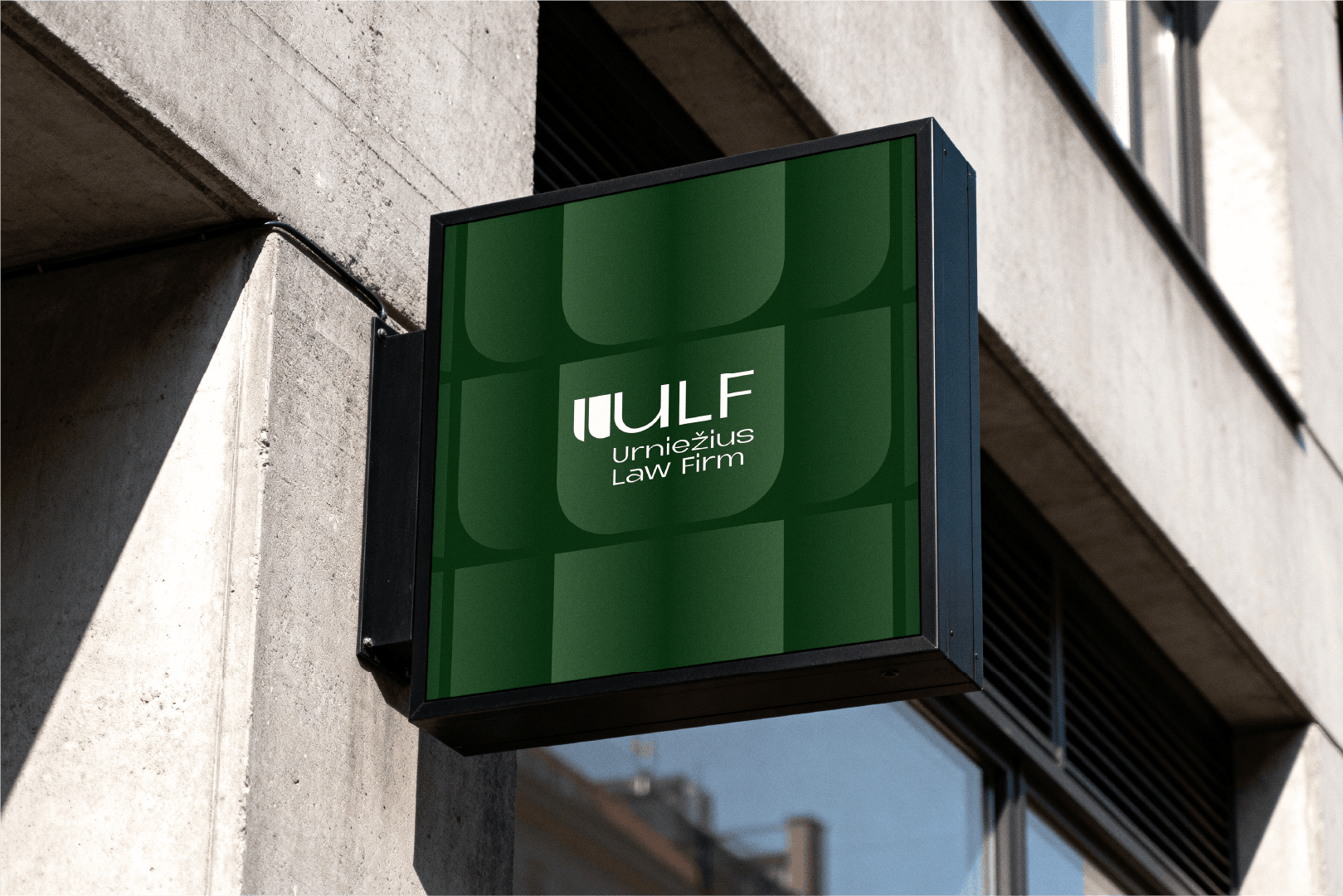

What I Learned Building a Brand for a Law Firm
When ULF first came to me, the brief was deceptively simple: we want to look like a law firm, just not like every other law firm. That's the kind of sentence that sounds straightforward until you sit down to actually do it, because the visual language of the legal industry is so deeply ingrained that breaking away from it without losing credibility is genuinely difficult. Dark navy, serif fonts, scales of justice, serious faces in suits — these things exist everywhere in legal branding not because they're good design, but because the industry collectively decided a long time ago that this is what trust looks like. Convincing anyone to move away from that takes more than a good idea. It takes a clear argument.
The early stages of the project were about understanding exactly what ULF wanted to feel like, which turned out to be a more interesting conversation than I expected. They weren't just asking for something prettier. They wanted to attract clients who found traditional law firms intimidating — people who needed legal help but felt put off by the cold, formal presentation that most firms lead with. The brief wasn't really about aesthetics at all. It was about access, and making the brand feel like the door was open rather than closed.
That framing changed how I approached everything. Instead of asking what a modern law firm should look like, I started asking what a brand looks like when it genuinely wants people to feel comfortable. That led to softer shapes, a warmer palette, typography with personality rather than authority, and a visual system that felt more like a considered creative studio than a legal institution. The identity still needed to communicate professionalism and competence — those weren't negotiable — but the way it did that had to come from confidence rather than formality.
The client pushed back early on, and I'll be honest, it was a useful moment. Some of the initial directions felt too far from what they knew, and there was a real concern that going too unconventional would undermine trust with certain clients. That's a legitimate worry, and dismissing it would have been the wrong move. So we had a proper conversation about where the boundaries actually were — what they were willing to own and what still made them uncomfortable — and that conversation shaped the final identity more than any single design decision. The result was bolder than where they started but grounded enough that they could stand behind it fully. That balance only came from the pushback, not despite it.
What I'm most proud of in the end isn't any single visual element — it's the system as a whole. A brand identity that only looks good in a presentation is only half a job. ULF needed something their team could actually use, consistently, across documents, presentations, social media, and everything in between, without needing a designer in the room every time. Building that kind of usability into an identity requires thinking beyond the logo and making decisions that hold up under real conditions. Consistent spacing, a clear typographic hierarchy, templates that are flexible enough to handle different content without falling apart — none of that is glamorous work, but it's what makes a brand function rather than just exist.
The broader lesson from this project is something I think about on every job now. The clients who come in asking for something different usually mean it, but they also need help understanding what different actually looks like in practice. Part of the work is design. A bigger part of it is building enough trust that the client feels safe making a choice that doesn't look like everything else they've seen. That's not something you can rush, and it's not something a good mood board can shortcut. It just takes time, honesty, and a willingness to have the uncomfortable conversations early rather than late.


Let’s keep in touch.
Discover more about high-performance web design. Follow us on Twitter and Instagram.

